The transition from the driver’s seat of a car to the cockpit of an airplane is often described as a leap, but in reality, it is a total recalibration of the human sensory system. Most of us spend our lives as “surface dwellers,” operating in a world where motion is primarily forward and our field of view is restricted to a narrow ribbon of asphalt. In a car, the controls are a means to solve a simple spatial equation: turn the wheel X degrees to follow Y curve.
In the air, this mathematical approach fails. Flight is not a set of solved equations; it is a responsive dialogue of pressure and horizon-tracking. While physics governs the machine, the act of flying is an immersive experience where you operate within six distinct motions: moving horizontally, vertically, and laterally, while simultaneously rotating in bank, pitch, and yaw. To master this environment, a pilot must move beyond “driving” and develop “attitude awareness.” This requires a shift toward a pictorial sense of the world, relying on the immediacy of control pressures and the relationship between the wings and the distant horizon rather than the delayed logic of a dashboard.
The 90/10 Rule: Why Looking Down is a Dangerous Habit
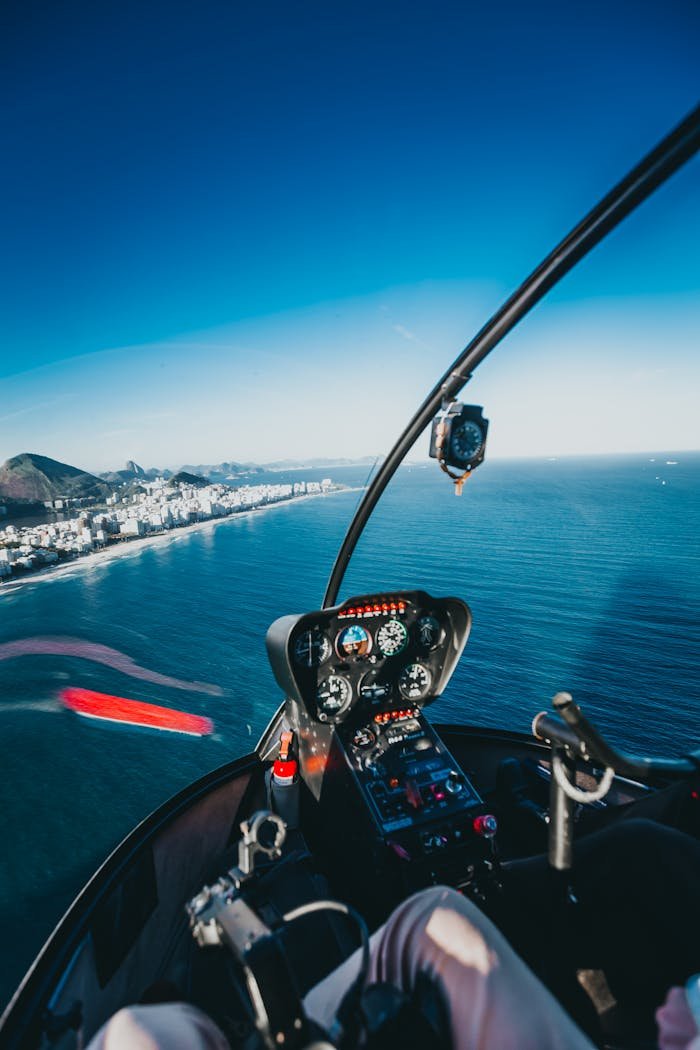
One of the first hurdles for a student pilot is mastering “Integrated Flight Instruction.” On the ground, we are conditioned to look at our dashboards for information. In the air, “chasing the instruments”—fixating on the dials to correct your path—is a recipe for instability. Because of instrument lag and the physics of gyroscopic precession, the needles on the dashboard often tell you what happened, not what is happening. If you wait for the altimeter to tell you that you’re descending, you’ve already lost the battle.
The professional secret is the 90/10 rule: 90 percent of your attention must remain outside the cockpit, focused on the natural horizon, with only 10 percent reserved for quick “snapshots” of the instruments to validate your performance. The natural horizon is the ultimate flight instrument because it is massive, immediate, and never lags.
“Airplane attitude by reference to the natural horizon… is immediate in its indications, accurate, and presented many times larger than any instrument could be.”
You are the Center of the Universe (Literally)
In an airplane, the Earth’s horizon is a fickle reference point. If you are flying upside down, pushing the control stick forward will actually make you gain altitude relative to the ground. To navigate a three-dimensional sky, you must adopt the “Center of Effect” mindset. The controls do not move the plane relative to the Earth; they move the plane relative to you.
This mental shift requires referencing the three axes of rotation that intersect at the airplane’s center. True airmanship begins when you visualize these movements relative to your own body:
- Pitch (Lateral Axis): Rotating the nose around an imaginary line from wingtip to wingtip. Pulling back (aft pressure) moves the nose from your feet toward your head; pushing forward moves it from your head toward your feet.
- Roll (Longitudinal Axis): Rotating around the line from nose to tail. Applying right pressure on the stick moves the perspective from your head toward your right hip.
- Yaw (Vertical Axis): Rotating the nose left or right. Applying right rudder moves the nose from your left shoulder toward your right shoulder.
Whether you are sideways, inverted, or climbing, the controls always function the same relative to your perspective. You are the fixed point in a spinning world.
Kinesthesis: The Secret Language of the Airframe
A master pilot “feels” the airplane through kinesthesis (sensing movement through the body) and proprioception (the spatial orientation detected by the inner ear and nerves). Your body becomes a biological sensor for the forces of flight, detecting the smallest accelerations before they ever register on a dial:
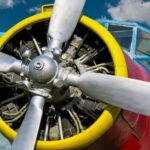
- Sound: Rushing air creates a distinctive noise pattern. In fixed-pitch propeller airplanes, the sound actually decreases as the pitch attitude increases (a climb) and increases as the nose drops into a dive.
- Vibration: The engine’s hum and the airframe’s resonance change character as you transition between a climb, cruise, and descent.
- Pressure: In a banked turn, the resultant load factor presses you into your seat. This increased G-force feels identical to pulling out of a dive, while the sensation of “lightness” mirrors the moment you lower the nose out of a climb.
However, this “feel” has a grave limit. When flying in clouds or poor weather (IMC), your inner ear and nerves can be easily fooled, leading to total sensory disorientation. In these moments, the “feel” that makes you a great pilot can become a liar, and you must trust the instruments over your own skin.
The Great Rudder Myth: What Actually Turns a Plane?
Ask a non-pilot how a plane turns, and they will likely point to the rudder, imagining it works like a boat’s. This is perhaps the most common misconception in aviation. The rudder does not turn the airplane.
A turn is actually created by the horizontal lift component. When you use the ailerons to bank the wings, the lift that was previously pulling the plane straight up is divided; a portion of that lift now pulls the airplane sideways. To perform a coordinated turn, a pilot must manage four distinct components:
- Ailerons: These establish the bank angle and determine the rate of turn.
- Elevator: Because some lift is diverted to the side, you must pitch the nose up slightly to replace the lost vertical lift and maintain altitude.
- Rudder: This is used solely to offset “adverse yaw”—the drag created by the wings as they bank—to keep the nose pointed into the wind.
- Throttle: Provides the thrust necessary to maintain airspeed through the increased resistance of the maneuver.
The Four Fundamentals: The DNA of Every Flight
Every complex maneuver—from a high-performance takeoff to a technical landing—is simply a combination of the “Four Fundamentals.” These are the building blocks of all airmanship:
- Straight-and-level flight
- Turns
- Climbs
- Descents
A takeoff is a combination of straight-and-level flight and a climb. A landing is a combination of ground handling, pitch control, and descent. If a pilot struggles with an advanced maneuver, the culprit is almost always a lack of mastery in these basics.
“Deficiencies in the mastery of the four fundamentals are likely to become barriers to effective and efficient learning.”
Conclusion: A New Way of Seeing
Learning to fly is less about memorizing buttons and more about developing a “pictorial sense” of the horizon. It is the art of fixing a reference point on the airplane’s cowling against the infinite line of the world and maintaining 그 relationship through subtle, measured pressures.
When you leave the ground, you leave the world of “going forward.” You enter a world of balances, where every movement of your fingers and feet is a response to the rushing air and the shifting weight of the machine. The next time you move through the world, consider this: How would your perspective change if you viewed your own movements not as a path toward a destination, but as a series of pressures and balances against the forces of nature?