
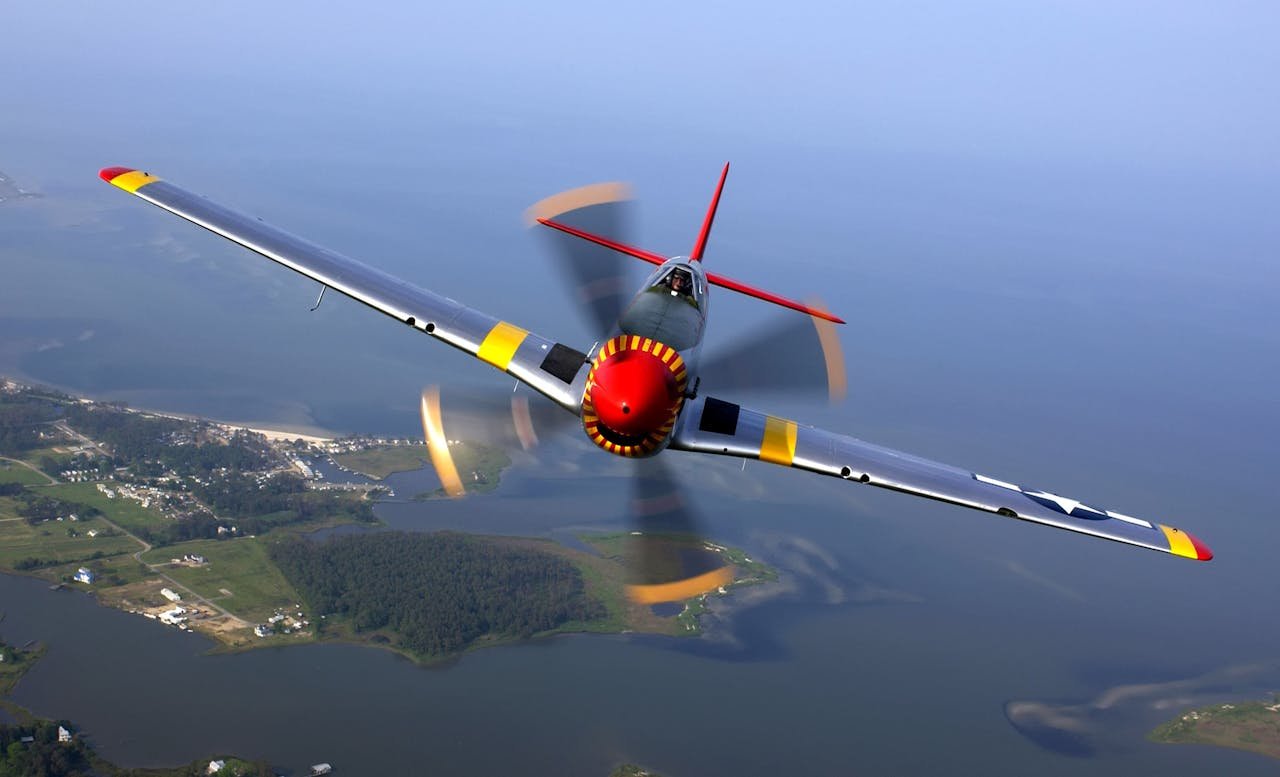
In the cockpit of a conventional aircraft, the turn coordinator is a critical component of the “basic six” flight instruments. It is a rate-of-turn instrument, providing the pilot with essential data regarding the direction and rate of turn, as well as the quality of the maneuver through coordination. Unlike the attitude indicator, the turn coordinator does not display pitch; instead, it relies on gyroscopic precession to translate aircraft yaw and roll into a readable rate indication.
1. Internal Mechanics: The Physics of Precession
The turn coordinator operates on the principle of gyroscopic precession. Internally, a direct current (DC) electric motor spins a heavy brass gimbal at high speeds. This creates rigidity in space, allowing the instrument to resist changes in its orientation.
- Translating Motion: When an aircraft yaws or rolls, it exerts a force on the spinning gyro. According to the laws of precession, the resulting movement occurs 90 degrees ahead in the direction of rotation. The gyro resists the aircraft’s turning motion and converts that resistance into a tilting motion of the gimbal.
- The 30-Degree Cant: While older Turn and Slip Indicators (TSI) use a gyro aligned parallel to the longitudinal axis, the turn coordinator’s gyro is canted upward at a 30-degree angle. This specific design allows the instrument to sense both the rate of roll and the rate of turn.
- The Calibrated Spring: A mechanical spring regulates the gyro’s tilt and returns the miniature airplane to the level position once the turning force is removed.
- System Redundancy: Pilots must recognize that while the attitude and heading indicators are typically vacuum-driven, the turn coordinator is almost exclusively DC-powered. This provides a vital electrical backup for maintaining controlled flight during a vacuum system failure.
2. Turn Coordinator vs. Turn and Slip Indicator
The following table outlines the technical distinctions between the two primary turn-sensing instruments.
| Feature | Turn and Slip Indicator (TSI) | Turn Coordinator (TC) |
| Visual Representation | Needle / Pointer | Miniature Airplane |
| Gyro Alignment | Parallel to longitudinal axis | Canted at a 30-degree angle |
| Primary Data | Rate of Turn only | Rate of Turn AND Rate of Roll |
| Reaction to Roll | No initial indication during roll-in | Immediate indication of roll rate |
3. Anatomy of the Instrument Face
The turn coordinator face provides high-fidelity data that must be interpreted correctly to ensure flight path precision:
- The Miniature Aircraft: The tilting of this symbol represents the rate of turn, not the bank angle. A pilot can be in a steep bank with a low rate of turn, and the instrument will reflect only the rate.
- Rate of Turn Scale: The top marks represent 0 degrees of turn (level flight). The lower marks, which the wings of the miniature aircraft align with, represent a Standard Rate Turn.
- The Inclinometer: A liquid-filled glass tube containing a steel ball. It functions as a “fake level,” showing the pilot the balance of aerodynamic forces.
- The “2 Minute” Label: This indicates the instrument is calibrated so that a standard rate turn will complete a full 360-degree circle in exactly 120 seconds.
4. Aerodynamics: The Physics of the Turn
A turn is produced by banking the wings, which shifts the lift vector. Pilots must master the following force relationships:
- Horizontal Component of Lift: As the aircraft banks, total lift is divided into vertical lift (opposing weight) and horizontal lift. The horizontal component is the force that actually pulls the aircraft through the turn.
- Inertia (Centrifugal Force): The FAA frequently refers to this as centrifugal force, but technically it is inertia. This is the tendency of the aircraft to continue in a straight line, resisting the horizontal lift.
- Load Factor: Because some vertical lift is sacrificed to create the turn, the pilot must increase the angle of attack (pulling back on the yoke) to maintain altitude. This increases the load factor (G-force) on the airframe.
5. Coordination: Measuring Turn Quality
The quality of a turn is determined by the balance between the horizontal component of lift and inertia.
- Coordinated Turn: Horizontal lift and inertia are perfectly balanced. The ball is centered, and the tail of the aircraft follows the nose precisely along the flight path.
- Slipping Turn: The ball moves toward the inside of the turn. Horizontal lift overpowers inertia (insufficient rudder). The nose slides outside the flight path, and the aircraft “slices” into the turn.
- Skidding Turn: The ball moves toward the outside of the turn. Inertia overpowers horizontal lift (excessive rudder). The nose points inward toward the flight path.
Pro-Tip: “Step on the Ball” To return to coordinated flight, apply rudder pressure on the same side as the ball. If the ball is right of center, apply right rudder until the ball is captured between the reference lines.
SAFETY WARNING: A skid is significantly more dangerous than a slip. If an aircraft stalls during a skidding turn, the uncoordinated state will likely induce a spin, which is often fatal at low altitudes (e.g., the base-to-final turn).
6. Standard Rate Turns and IFR Math
Standard rate is defined as 3 degrees per second. Pilots flying in instrument meteorological conditions (IMC) rely on this constant for predictable navigation.
- Timing the Turn: At a standard rate, 360° takes 2 minutes; 180° takes 1 minute; 90° takes 30 seconds.
- The Airspeed Relationship: Standard rate is not a fixed bank angle. As True Airspeed (TAS) increases, the bank angle required to maintain a standard rate also increases. A Cessna at 100 knots requires a shallower bank than a jet at 250 knots to achieve 3° per second.
- Rule of Thumb: To estimate the bank angle for a standard rate turn, use the formula: (TAS / 10) + 5.
- Example: 120 knots / 10 = 12; 12 + 6 = 18 degrees of bank.
7. Failure Modes and Operational Checks
Pre-Flight Taxi Check
During taxi, the pilot must verify the instrument’s integrity. When turning the aircraft on the ground:
- The miniature aircraft should deflect in the direction of the turn.
- The ball should swing to the opposite side of the turn.
Failure Warnings
- The Red Flag: A red “OFF” flag appears when electrical power to the instrument is lost.
- The “Black Dirt” Silent Failure: The absence of a red flag does not guarantee the instrument is reliable. The flag only indicates that electricity is reaching the unit.
CAUTION: Motor Brush Failure Internal motor brushes eventually wear down, creating “black dirt” within the casing. This can cause the motor to seize or spin at an incorrect RPM while the red flag remains hidden. If the instrument appears “frozen” or laggy despite no red flag, it must be considered failed.
Tumbling the Gyro
Standard turn coordinators are not “free” gyros; they have limited degrees of freedom. Extreme pitch or bank maneuvers can exceed the gimbal limits, causing the gyro to “tumble.” This results in erroneous data until the gyro can re-stabilize in level flight.
Conclusion
The turn coordinator is a pilot’s primary tool for ensuring coordinated, predictable flight. While it is often relegated to “backup” status in glass cockpits, its independence from the vacuum system and its ability to provide roll-rate data make it an indispensable safety asset. Precise instrument flight is impossible without mastering the “step on the ball” principle and the timing of standard rate turns.